
Let's cut through the jargon. When we talk about "digital transformation" for a small business, we're not talking about some massive, expensive tech overhaul. It's much simpler than that.
It’s about finding smart, practical ways to use technology to solve everyday problems, work more efficiently, and make life easier for you and your customers. Think of it as swapping out old, clunky tools for modern ones that just work better—like trading a paper ledger for accounting software that handles invoicing for you. The goal is to boost efficiency, save money, and create a better customer experience. This isn't just a "nice-to-have"; it's how small businesses stay competitive and resilient.
What Digital Transformation Really Means for Your Business
Forget the confusing buzzwords you've heard. For a small business, digital transformation is about taking a hard look at your daily grind and asking, "Is there a better, faster, tech-powered way to do this?" It’s a practical evolution, not some intimidating revolution.
Here’s a real-world example: A local contractor I know used to spend hours chasing down payments with phone calls and paper invoices. He switched to a simple online invoicing tool that automatically sends bills, tracks who has paid, and sends polite reminders. That’s digital transformation in a nutshell. He solved a huge headache—late payments and wasted time—with a straightforward digital solution.
Moving Beyond the Basics
Most businesses are already using digital tools like email and a website, and that's a great start. But real transformation happens when you start connecting those tools to make your whole operation run more smoothly. It’s the difference between having a calculator on your desk and having an accounting system that manages everything from payroll to tax prep seamlessly.
It’s all about making smart, incremental improvements that build on each other. And honestly, it's becoming critical for survival. A recent survey found that nearly 9 out of 10 small business leaders (89%) say their digital tools are essential for competing effectively and weathering economic ups and downs. If you want to dive deeper, you can explore more insights on these digital transformation trends and get ready for what’s coming next.
The Core Pillars of Small Business Digital Transformation
To break it down even further, most successful digital shifts for small businesses focus on a few key areas where technology delivers the biggest bang for your buck. These are the foundational pillars that support a stronger, more agile business.
Here’s a quick look at what that means in practice:
Core Pillars of Small Business Digital Transformation
| Pillar | What It Solves | Practical Example |
|---|---|---|
| Operational Efficiency | Slashes time spent on repetitive, manual tasks so your team can focus on more important work. | Using a tool like Calendly to let clients book appointments online, which automatically adds them to your calendar and sends reminders. |
| Customer Experience | Creates a smoother, more professional, and responsive experience for your clients. | Implementing a simple Customer Relationship Management (CRM) system to keep track of client conversations and follow-ups. |
| Data & Security | Protects your most critical business information and helps you make smarter decisions. | Ditching the filing cabinet and moving your files to a secure, automatically backed-up cloud system like Microsoft 35. |
| Scalability | Builds a tech foundation that can easily grow with your business, not hold you back. | Switching to a VoIP phone system that lets you add new lines and features with a few clicks as you hire more people. |
At the end of the day, a smart digital strategy is all about solving your specific business challenges. It gives you the power to do more with less, adapt quickly to change, and—most importantly—focus on what really matters: growing your business and taking care of your customers.
Keep your business running without IT headaches.
GT Computing provides fast, reliable support for both residential and business clients. Whether you need network setup, data recovery, or managed IT services, we help you stay secure and productive.
Contact us today for a free consultation.
Call 203-804-3053 or email Dave@gtcomputing.com
Building Your Digital Transformation Roadmap
Jumping into a "digital transformation" doesn't mean you have to gut your entire business and start from scratch. That's overwhelming and unnecessary. Think of it more like renovating a house one room at a time, not building a skyscraper overnight. The secret is having a clear plan—a roadmap—that tackles your biggest headaches first and builds momentum from there.
The first move is a simple self-audit. Take an honest look at your daily workflow and find the biggest time-wasters and bottlenecks. Where do you and your team constantly mutter, "There has to be a better way to do this"? Is it appointment scheduling? Chasing down invoices? Juggling client files? Those pain points are your starting line.
Start with Simple, High-Impact Wins
Once you’ve got a list of frustrations, go for the "quick wins." These are the low-cost, high-impact changes that give you an immediate payoff and prove that this whole digital thing is worth it. You don't need to reinvent the wheel on day one.
Success here is all about building positive momentum. When your team sees a small change make their jobs noticeably easier, they'll be far more excited about the bigger shifts down the road.
Here are a few classic examples of powerful quick wins:
- Cloud File Sharing: Get your documents off that old server in the closet and onto a secure cloud platform like Microsoft 365. This lets your team collaborate on files from anywhere, guarantees everything is backed up, and instantly tightens up your security.
- Online Appointment Scheduling: Add a tool to your website that lets clients book appointments themselves. This simple change cuts way down on back-and-forth phone calls and emails, prevents scheduling mix-ups, and offers a modern convenience your clients will absolutely love.
- Digital Invoicing: Ditch the paper or manual invoices for a system that automates billing and sends out payment reminders for you. This one change can seriously improve your cash flow by making sure you get paid faster.
This simple chart shows how every step you take should be tied to a clear business goal.
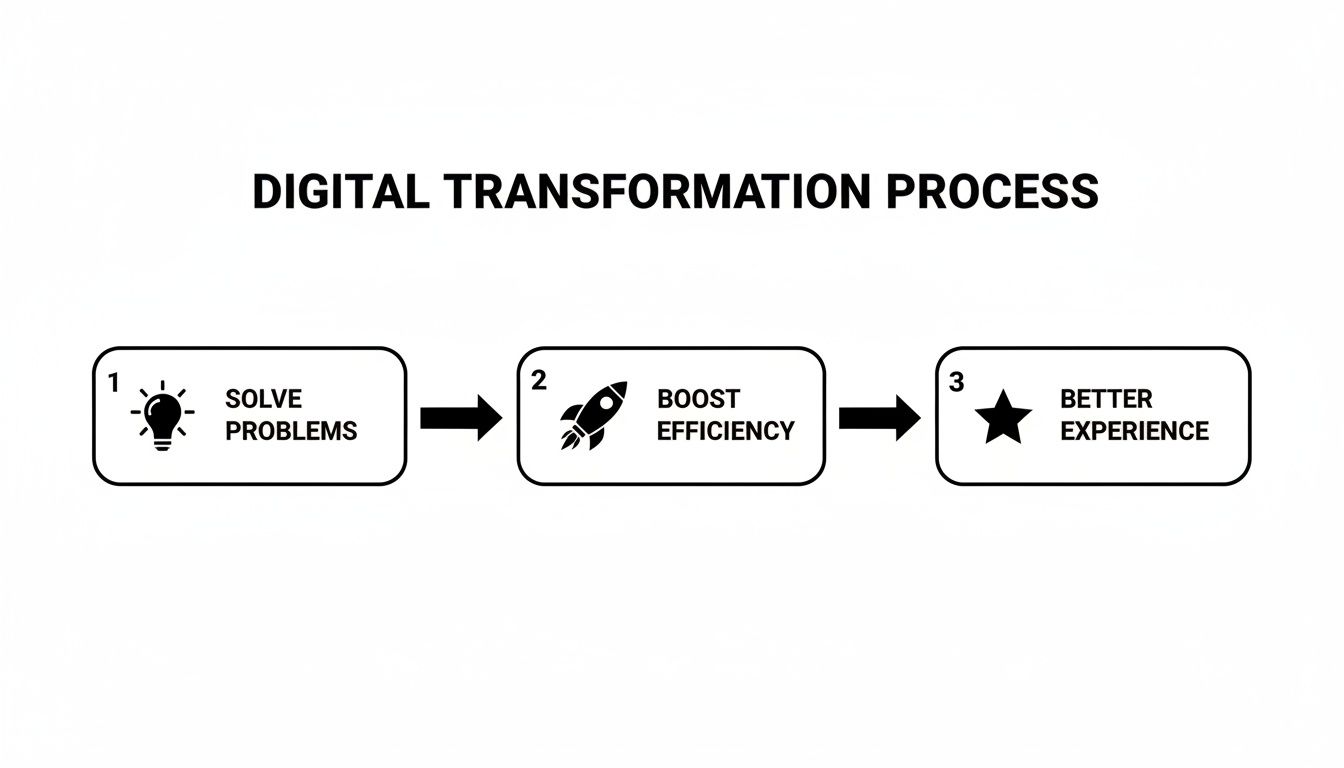
The idea is that every tool you bring in should solve a real problem. That solution then makes you more efficient, which ultimately leads to a better experience for both your team and your customers.
Modernize Your Core Business Systems
After you’ve knocked out a few quick wins, it’s time to look at the core systems that really run your business. These are bigger investments, for sure, but they build the foundation for long-term growth and stability. This is where you need to be strategic.
A report from the World Economic Forum found that one in four small businesses sees just implementing technology as a top challenge. This really drives home how important it is to pick the right systems—ones that solve today's problems but are flexible enough for tomorrow's growth.
The goal isn't just to buy new software; it's to create an integrated ecosystem where your tools actually talk to each other. That integration is what separates a random collection of apps from a truly digital operation.
Think about upgrading these foundational systems:
- Customer Relationship Management (CRM): A CRM is like a digital rolodex on steroids. It keeps all your client information in one place, tracks every email and phone call, and helps you give more personal service. No more relying on scattered sticky notes or someone's memory; your whole team gets a single source of truth for every customer.
- Accounting Software: Modern cloud accounting software does so much more than just track money in and money out. It can handle payroll, manage inventory, and connect directly to your bank and CRM, giving you a live, up-to-the-minute view of your financial health.
- Communication Systems: Upgrading from an old landline to a Voice over IP (VoIP) phone system can be a game-changer. VoIP gives you professional features like an auto-attendant ("press 1 for sales…"), voicemail-to-email transcripts, and the ability to take business calls on your cell phone. It makes you look bigger and work smarter.
Building a roadmap is just about taking a smart, step-by-step approach. By starting small, proving the value with quick wins, and then strategically upgrading your core systems, you make the entire process manageable, affordable, and incredibly effective.
Keep your business running without IT headaches.
GT Computing provides fast, reliable support for both residential and business clients. Whether you need network setup, data recovery, or managed IT services, we help you stay secure and productive.
Contact us today for a free consultation.
Call 203-804-3053 or email Dave@gtcomputing.com
Protecting Your Business with Modern Cybersecurity
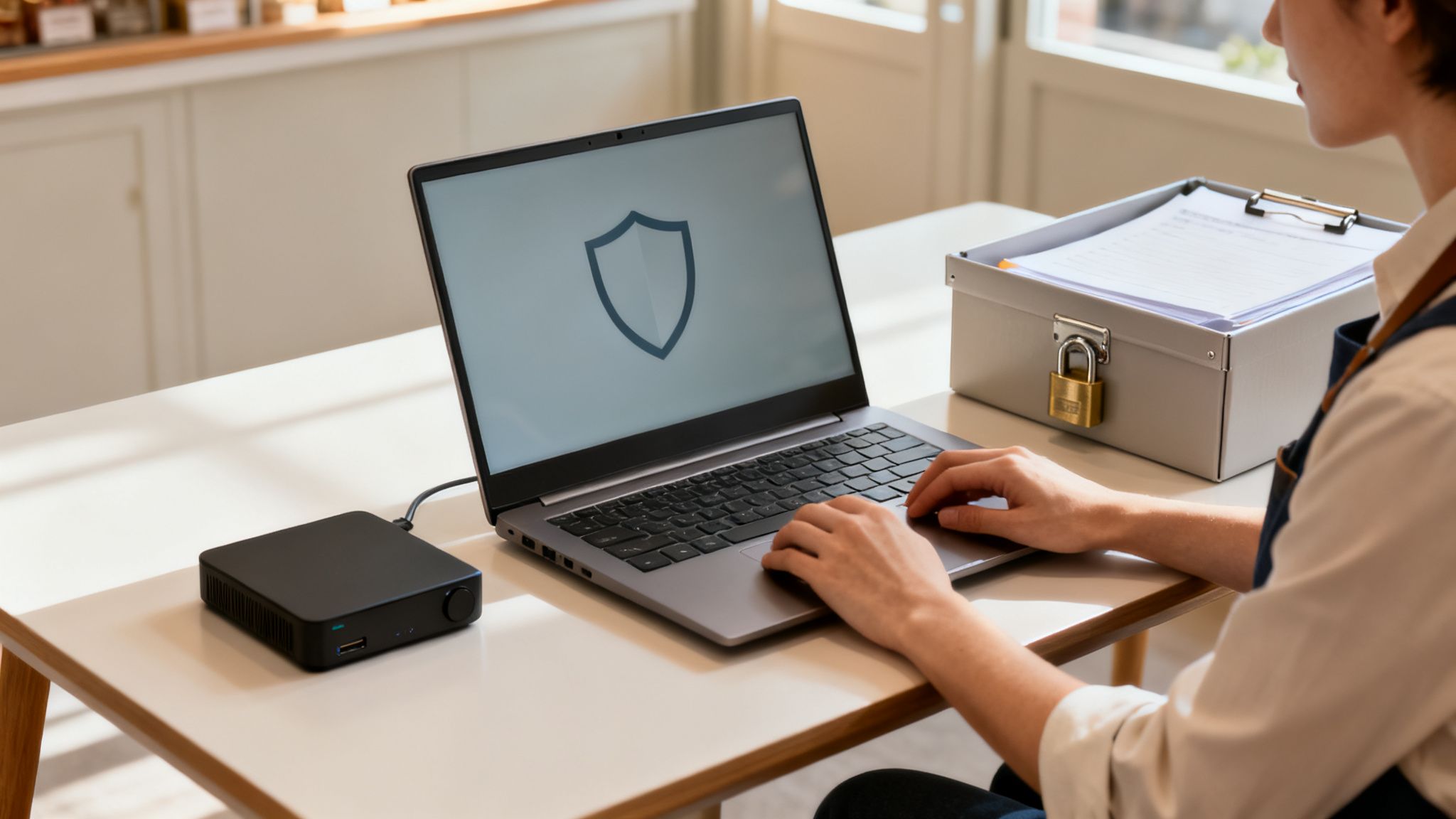
As you start using more digital tools, you absolutely have to start thinking about protection. Going digital isn't just about working faster; it's about building a secure foundation to protect your hard-earned success. Without a solid security plan, all your new digital assets—customer lists, financial records, business plans—are sitting ducks.
Think of your business data like the cash in a physical store. You wouldn't leave the front door unlocked overnight, and the same logic applies to your digital operations. Cyber threats like phishing scams and ransomware are just the modern version of a break-in, but honestly, they can be far more devastating.
Understanding the Modern Risks
Cybersecurity can sound intimidating, but the threats most small businesses face are surprisingly straightforward. Phishing, for example, is often just a scam email designed to trick an employee into clicking a bad link or giving up a password. Ransomware is nasty software that locks up all your files until you pay a huge fee to get them back.
These aren't just problems for big corporations; they are immediate, real-world risks for businesses of any size. In fact, an eye-watering 81% of U.S. small and medium-sized businesses experienced a security or data breach in the past year. What's truly scary is that over 40% of those attacks were powered up by AI, making them smarter and harder to spot than ever before.
This is exactly why having multiple layers of security isn't just a good idea—it's non-negotiable. A single tool just won't cut it anymore; you need several defenses working in concert.
Building Your Digital Fortress
A practical security strategy for a small business doesn't need a massive budget, but it does require a smart, layered approach. Every layer you add makes it that much harder for an attacker to get through.
Here are the essential layers you need to have in place:
- Essential Antivirus and Malware Protection: This is your first line of defense. Modern antivirus software does more than just scan for known viruses; it actively watches for suspicious behavior to shut down new threats before they can cause any harm.
- A Secure Network Setup: Your office Wi-Fi needs to be way more secure than what you'd find at a coffee shop. A professionally configured network with a business-grade firewall creates a secure perimeter, giving you control over who—and what—can access your systems.
- Employee Awareness Training: Your team is your greatest asset, but they can also be your biggest vulnerability. Simple, regular training on how to spot phishing emails and use strong passwords can stop the vast majority of common attacks in their tracks.
Think of your security like a chain-link fence. One broken link—one weak password or one employee who clicks a bad link—can compromise the entire structure. Strengthening every link is the key to real protection.
For more hands-on advice, check out our guide on essential cybersecurity tips for small business owners.
The Ultimate Safety Net: Data Backup and Recovery
Even with the best defenses in the world, things can still go wrong. A hard drive can die, a natural disaster could strike, or a particularly clever cyberattack could slip through. This is where your data backup and disaster recovery plan becomes your ultimate safety net. It’s what guarantees you can get back to business quickly, no matter what happens.
It's really important to understand the different types of backups and why a hybrid strategy is the gold standard.
- Local Backups: This is when you save copies of your data to an external hard drive or a server right there in your office. It's fantastic for quickly and easily restoring files if a single computer fails.
- Cloud Backups: This means your data is securely copied and stored in a remote data center. This is what protects you from localized disasters like a fire, flood, or theft that could wipe out both your original data and your local backup.
A hybrid approach, which uses both local and cloud backups, gives you the best of both worlds. You get the speed of a local restore for everyday hiccups and the ironclad protection of an off-site cloud copy for true catastrophes. This strategy ensures that whether you're dealing with a simple server crash or a devastating ransomware attack, your business can recover its critical information and keep moving forward.
Keep your business running without IT headaches.
GT Computing provides fast, reliable support for both residential and business clients. Whether you need network setup, data recovery, or managed IT services, we help you stay secure and productive.
Contact us today for a free consultation.
Call 203-804-3053 or email Dave@gtcomputing.com
Using Automation and AI to Boost Efficiency
You don't need a massive budget or an in-house team of data scientists to bring artificial intelligence (AI) and automation into your business. For a small business, these aren't some far-off, futuristic concepts. They are practical, right-now solutions to everyday problems, designed to give you back your most valuable asset—your time.
This part of your digital transformation is all about putting those tedious, repetitive tasks on autopilot. We’re talking about the jobs that drain your team's energy and pull them away from the work that actually grows your business.
Think of it like hiring the perfect assistant. This assistant works 24/7, never makes a mistake, and handles all the boring stuff without a single complaint. This frees up your real-life experts to do what they do best: talk to clients, solve complex problems, and push the business forward.
Practical Automation That Works Today
Getting started with automation is a lot easier than most people think. There are plenty of user-friendly tools out there that can solve common headaches without you needing to write a single line of code. The goal is simple: find the straightforward, rule-based tasks and let the software take over.
Here are a few powerful examples any small business can put into action right away:
- Automated Appointment Reminders: A dental office can crush its no-show rate by setting up automatic text and email reminders. This one simple automation saves the front desk hours on the phone and directly protects revenue.
- AI-Powered Website Chatbots: You can install a simple chatbot on your website to answer common questions around the clock. It can handle things like, "What are your hours?" or "Where are you located?" instantly, so potential clients get answers without having to wait.
- Automated Invoicing and Follow-ups: Instead of manually creating and chasing down every single invoice, your accounting software can do it for you. It can generate invoices automatically and send out polite payment reminders until the bill is settled.
To really get the most out of this, understanding the best marketing automation tools for small business can be a game-changer for your outreach and internal workflows.
Sector-Specific Examples of Efficiency Gains
The real power of AI and automation shines when you see how it applies to specific industries. These tools aren't one-size-fits-all; they solve unique challenges for different types of service-based businesses.
For service professionals, every minute spent on admin is a minute you can't bill to a client. Automation hits this problem head-on by slashing those non-essential tasks, which translates directly to a healthier bottom line.
Let's look at a couple of real-world scenarios:
For a Law Firm: Imagine automating the entire client intake process. A potential client fills out a secure form on your website. The system instantly creates a new file, drafts a standard engagement letter, and schedules the initial consultation. All that manual data entry and back-and-forth? Gone.
For a Dental Practice: Going beyond just reminders, a practice can automate insurance verification. Before the patient even walks in, the system can check their coverage details online and flag any potential issues for the front desk. This makes check-in a breeze and avoids those awkward billing surprises later on.
The trend is undeniable: AI and automation are quickly moving from "nice-to-have" to a core part of running a successful small business. While a recent survey found only 38% of SMBs feel they have the right AI tools for growth, a staggering 67% are underestimating its massive impact. You can get a clearer picture of where things are heading by checking out the full research on small business trends.
By jumping on these tools now, you're not just keeping up—you're getting a serious leg up on the competition.
Keep your business running without IT headaches.
GT Computing provides fast, reliable support for both residential and business clients. Whether you need network setup, data recovery, or managed IT services, we help you stay secure and productive.
Contact us today for a free consultation.
Call 203-804-3053 or email Dave@gtcomputing.com
Modernizing Your Core IT Infrastructure
While fancy AI tools and shiny new apps get all the buzz, the real engine behind any successful digital transformation for small business is your core IT infrastructure.
Think of it like the foundation of a house. You can install all the smart home gadgets you want, but if the wiring is from the 1970s and the plumbing is leaky, you’re just waiting for disaster. Your technology foundation—your network, phone system, and data storage—is what holds everything else up.
Modernizing this core isn't about buying the most expensive gear on the shelf. It’s about building a reliable, secure, and flexible backbone that can actually grow with you. This is where you swap out those clunky, outdated systems for smarter solutions that save money, boost productivity, and stop those daily tech headaches in their tracks. It’s about setting your business up for the future, not just slapping another band-aid on today’s problems.
Embracing The Power Of The Cloud
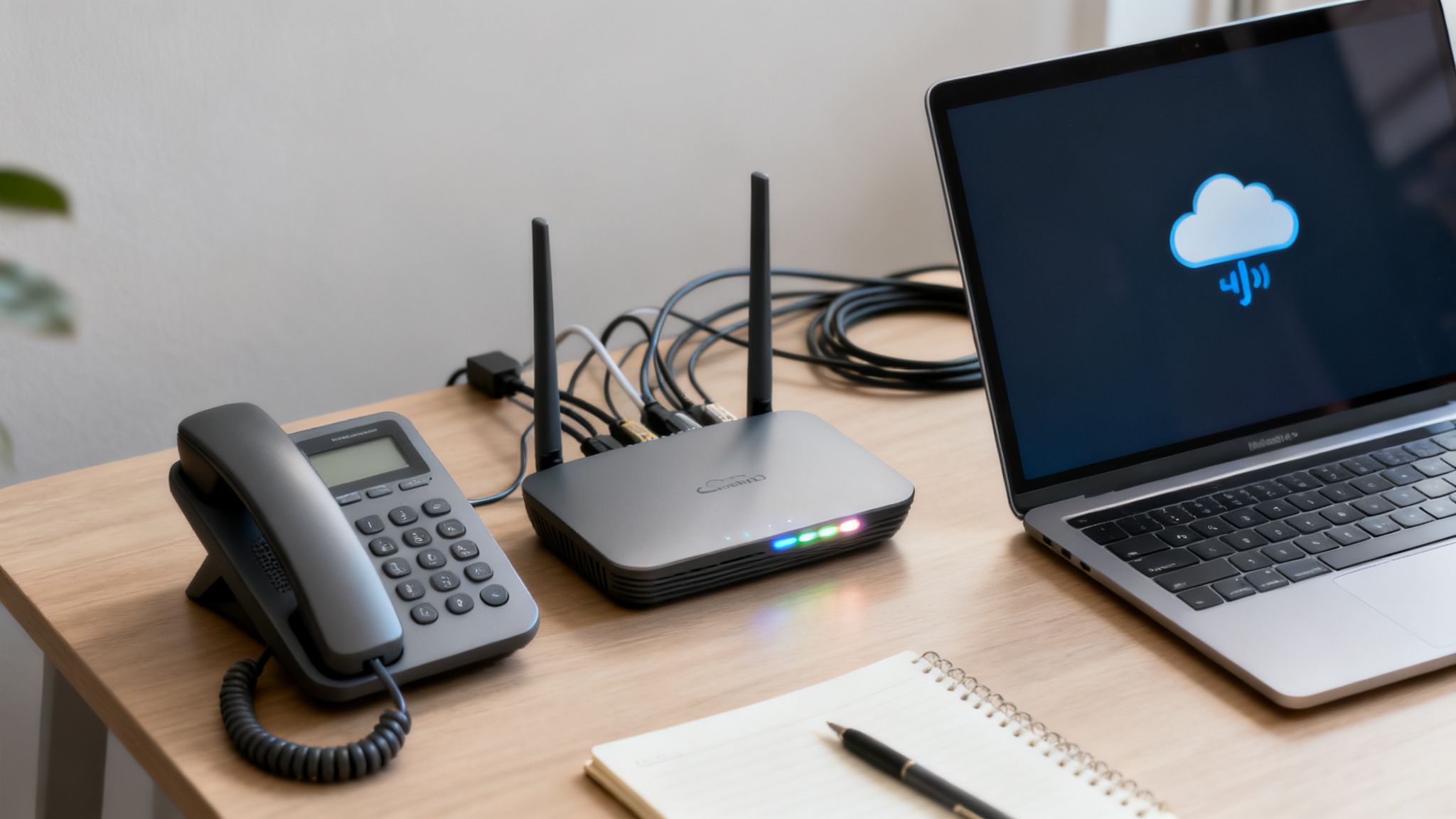
One of the single most powerful moves a small business can make is shifting to the cloud. Getting rid of that dusty old server humming in the closet and moving to a cloud-based system like Microsoft 365 or Google Workspace is an absolute game-changer. Suddenly, your team can securely access their files, emails, and apps from anywhere, on any device.
This move immediately slashes your hardware costs and erases maintenance headaches. Instead of you worrying about server crashes or patching software, you get to lean on enterprise-grade security and reliability. The cloud isn't just a digital filing cabinet; it powers a much more agile and resilient way to work. You can dive deeper by exploring various legacy system modernization strategies to see how a cloud-first mindset can remake your operations.
Building A Rock-Solid Business Network
Your network is the central nervous system of your business. A slow, spotty connection is way more than an annoyance—it’s a productivity killer that costs you money every single minute it’s down. That consumer-grade router you picked up at a big-box store just wasn't built to handle the demands of a modern business.
A business-grade network, designed and installed by a pro, gives you several critical advantages:
- Reliability: It delivers a stable, consistent connection so your team can work without constant interruptions and dropped calls.
- Security: It comes with serious security features, like a robust firewall, to shield your sensitive data from outside threats.
- Scalability: It can easily grow with you, accommodating new employees and more devices without grinding to a halt.
A strong network is the unsung hero here, making sure all your other digital tools can actually perform the way they're supposed to.
A business-grade network is like paving a smooth, multi-lane highway for your data. A consumer router is like a bumpy dirt road. Both might get you there eventually, but only one is built for speed, security, and heavy traffic.
Upgrading Your Communications With VoIP
Is your business phone still tethered to an old-school landline? It’s definitely time for an upgrade. A Voice over IP (VoIP) system is a modern phone service that runs over your internet connection, offering incredible flexibility and powerful features for a fraction of what traditional phone lines cost.
With VoIP, you get professional features that make your small business sound like a major corporation. For instance, putting effective customer relationship management systems in place is a pillar of digital transformation, and a modern VoIP system can often integrate directly with them to automatically log calls and improve client service.
A VoIP system typically includes:
- Auto-Attendant: A virtual receptionist greets callers and routes them where they need to go ("Press 1 for Sales, Press 2 for Support").
- Voicemail-to-Email: Get your voicemails sent as audio files or even text transcripts right to your inbox. No more dialing in to check messages.
- Flexibility: Take your business number with you anywhere through an app on your smartphone or laptop. You're never tied to your desk again.
Modernizing your infrastructure isn't just a technical task to check off a list; it's a strategic business decision that pays dividends in efficiency, security, and scalability for years to come.
Keep your business running without IT headaches.
GT Computing provides fast, reliable support for both residential and business clients. Whether you need network setup, data recovery, or managed IT services, we help you stay secure and productive.
Contact us today for a free consultation.
Call 203-804-3053 or email Dave@gtcomputing.com
Partnering with GT Computing for Your Transformation
Trying to navigate a digital transformation for your small business can feel like a maze, but you absolutely don’t have to go it alone. The most successful projects aren't just about buying new software; they're about having a real partner in your corner to guide you through every step, from the initial idea to long-term support. That's exactly where GT Computing becomes your dedicated IT ally.
We act as the bridge between your business goals and the tech you need to make them happen. For small businesses all across Connecticut, we turn strategy into real-world action. Our whole process starts with a deep dive into your current technology to pinpoint the most critical spots for improvement, making sure every dollar you invest delivers a real, tangible impact.
From Strategy to Execution
Once we have a clear, practical roadmap, our certified technicians get to work managing the entire implementation. We handle it all—from setting up secure cloud backups and modernizing your network to rolling out a new VoIP phone system. Instead of you or your team having to become IT experts overnight, you can stay focused on what you do best: running and growing your business.
But our job doesn't end when the new systems are up and running. Technology is always changing, and unfortunately, so are the threats that come with it. We provide continuous, proactive support to keep your systems humming along smoothly and securely, long after the project is officially "done."
Your All-in-One Managed IT Partner
Think of us as your outsourced IT department, giving you the kind of support big companies get, but without that enterprise-level price tag. Our services cover all the essentials needed to power a modern, secure, and efficient business.
The real value of a technology partner lies in proactive management. It’s about preventing problems before they happen, not just fixing them after they’ve already caused downtime and frustration.
Our ongoing support includes:
- Proactive Device Monitoring: We keep a constant, watchful eye on your computers and servers to catch and fix issues before they can blow up your workday.
- Robust Cybersecurity: From managed antivirus to firewall protection, we build layers of security to guard your valuable business data against modern threats.
- Secure Cloud Backups: Your data is your most critical asset. Period. We make sure it's backed up securely and can be brought back quickly if a disaster ever strikes.
When you partner with us, you get more than just tech support; you get a genuine strategic advantage. You can learn more about how our managed IT services for small business provide peace of mind and a solid foundation for growth. Let us handle the tech, so you can focus on your vision for the future.
Keep your business running without IT headaches.
GT Computing provides fast, reliable support for both residential and business clients. Whether you need network setup, data recovery, or managed IT services, we help you stay secure and productive.
Contact us today for a free consultation.
Call 203-804-3053 or email Dave@gtcomputing.com
Have Questions? We Have Answers.
Taking the first steps toward a digital overhaul can feel a little daunting. Most business owners I talk to have similar, practical questions right out of the gate. Let's tackle some of the most common ones head-on so you can move forward with confidence.
What’s The Best First Step On A Shoestring Budget?
If you’re watching every penny, the single most impactful thing you can do is switch to a cloud-based productivity suite like Microsoft 365 or Google Workspace. It sounds simple, but this one move is huge.
It consolidates your email, file storage, and team collaboration tools into one secure, predictable monthly bill. Right away, you can unplug that clunky, expensive server in the closet. Your data is backed up, and your team can suddenly work from anywhere. It's a low-cost, high-impact investment that lays the perfect groundwork for everything else.
Does Going Digital Make Me More Vulnerable To Hackers?
It’s a fair question. While using new tools introduces new things to think about, a proper digital transformation for small business strategy almost always improves your overall security. Think about it: those old, dusty systems you're using are often unsupported and haven't seen a security patch in years, making them an easy target for cyberattacks.
Modernizing your tech means building in security from the ground up. When we partner with a business, we're talking about proactive monitoring, managed antivirus, secure cloud backups, and a professionally configured network. The goal isn't just to go digital; it's to build a resilient, secure foundation that's far tougher than your old on-site hardware ever was.
How Does This Actually Help A Service-Based Business?
For businesses that sell services, not products, the benefits are immediate and tangible. I've seen a law firm switch to a cloud-based practice management system and suddenly they can securely pull up client files from the courthouse, automate repetitive document creation, and track billable hours down to the minute. It’s a game-changer for their efficiency.
In service industries, time is literally money. Digital transformation attacks this problem head-on by automating administrative busywork, freeing up your experts to focus on the client and patient work that actually generates revenue.
Take a dental practice. We can set them up with a modern VoIP phone system that pulls up patient records when they call, automatically texts appointment reminders to slash no-shows, and lets new patients book their first visit online at 10 p.m. In both cases, the result is a better client experience and more time for the professionals to do what they do best.
Keep your business running without IT headaches.
GT Computing provides fast, reliable support for both residential and business clients. Whether you need network setup, data recovery, or managed IT services, we help you stay secure and productive.
Contact us today for a free consultation.
Call 203-804-3053 or email Dave@gtcomputing.com
.