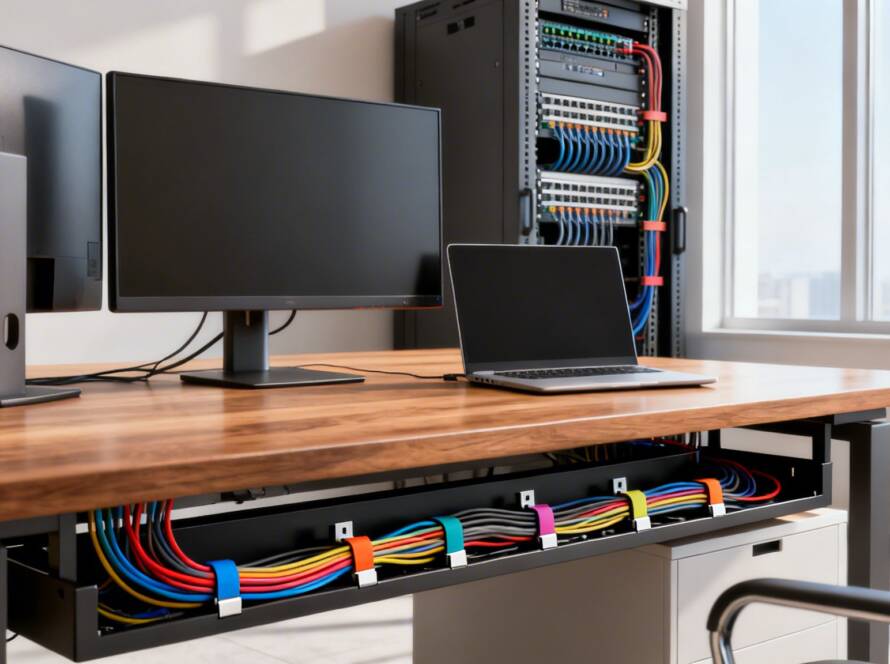


When we talk about "American IT solutions," we're not just talking about a help desk you call when your printer breaks. We're talking about a strategic technology partner—a US-based team whose whole job is to manage the digital health and growth of your business. They handle everything from your network infrastructure to cybersecurity, freeing you up from trying to solve complex tech problems on your own.
Think of Us as Your Digital General Contractor
Imagine building a new office. You wouldn't try to pour the foundation, run the electrical, and install the security system yourself, would you? You'd hire a general contractor. The best American IT solutions play that exact same role for your technology. A local IT partner oversees your entire digital setup, making sure every single piece works together smoothly and dependably.
This kind of partnership gets your business out of that frustrating, reactive cycle where you only call for help after something has already gone wrong. Instead of waiting for a crash, a proactive partner builds a system of constant maintenance and monitoring to catch problems before they can shut you down. For a small business, that shift from reactive to proactive is a game-changer.
The Power of a Local Partner
Choosing a local provider over some giant, faceless national corporation has some serious perks. A local partner gets the regional business environment you operate in. More importantly, they can provide quick, hands-on support when a remote fix just won't cut it. That accessibility builds a real relationship based on trust, and you know they're genuinely invested in seeing you succeed. They start to feel like an extension of your own team, not just another line item on an invoice.
For most business owners, the real value of an IT partner is measured in uptime and peace of mind. When you know an expert is actively protecting your systems, you can finally stop worrying about tech and focus on serving your clients and growing your business.
Ultimately, having a dedicated partner helps you sidestep the common tech headaches that derail so many small companies.
- Preventing Downtime: We keep an eye on your servers, workstations, and network gear to spot and fix issues before they can bring your business to a standstill.
- Strengthening Security: Our team puts multiple layers of security in place to guard your sensitive data against the constant threat of cyberattacks.
- Ensuring Compliance: If you're in a field like law or dentistry, we'll help you navigate the complexities of regulations like HIPAA to make sure your tech is fully compliant.
- Strategic Planning: As you grow, we help you map out a technology plan to ensure your systems can keep up with your ambitions.
For most small businesses, getting the fundamentals right—like solid data backup solutions for small business—is non-negotiable. A great IT partner doesn't just set it up; they test it and manage it continuously. This kind of hands-on management turns technology from a painful, unpredictable cost into a reliable tool for building a stronger, more profitable business.
The Core Services That Power Your Business
So, what does a top-tier American IT solutions provider actually do? It's best to think of their services not as a menu of technical options, but as the essential systems that keep your business running. Just like an office building needs a solid electrical grid, a reliable security system, and a fire escape plan, your business needs a digital equivalent to stay productive and safe.
Each service tackles a specific job, from making sure information flows smoothly to shielding it from cyber threats and getting you back on your feet after a disaster. When they all work together, technology stops being a headache and starts becoming your biggest asset.
The market numbers back this up. The U.S. IT services industry is a powerhouse, projected to hit USD 490.86 billion in 2026 and soar to USD 737.42 billion by 2031. This explosive growth shows just how much American businesses rely on technology to compete. While managed services currently hold a big piece of the pie at 27.46% of the market share, cybersecurity is the fastest-growing segment—no surprise, given the constant threat of ransomware. You can dig deeper into these trends in the full United States IT services market report.
To give you a clearer picture, let's break down what these core services look like in the real world and how we handle them here at GT Computing.
Key American IT Service Offerings At a Glance
This table quickly summarizes the essential IT services that form the foundation of a healthy, secure business technology environment.
| Service Category | What It Solves For You | Our Approach at GT Computing |
|---|---|---|
| Managed IT Services | Ends the stress of unexpected tech failures and constant firefighting by proactively maintaining your systems for peak performance and uptime. | We become your dedicated IT department, handling everything from routine updates and server monitoring to 24/7 helpdesk support so you can focus on your business. |
| Network Design | Eliminates frustrating Wi-Fi dead zones, slow file transfers, and security gaps by building a fast, reliable, and secure data highway for your office. | We design and implement robust networks using top-tier hardware like Ubiquiti, ensuring seamless coverage and segmenting traffic to protect your sensitive data. |
| Cybersecurity | Protects your business from costly data breaches, ransomware attacks, and reputational damage with a multi-layered defense strategy. | Our security stack includes advanced threat detection, firewall management, and crucial employee security training to turn your team into your first line of defense. |
| Disaster Recovery | Ensures your business can survive a catastrophic event—like a fire, flood, or major cyberattack—by providing a clear, tested plan to restore data and operations fast. | We create a customized Business Continuity and Disaster Recovery (BCDR) plan with automated, verifiable backups stored both locally and in the cloud for complete peace of mind. |
These services aren't just standalone products; they're interconnected parts of a complete strategy to keep your business technology running smoothly and securely.
Managed IT: Your Proactive Digital Manager
Managed IT completely flips the old "break-fix" model on its head. Instead of calling for help after something breaks, this service is all about preventing problems in the first place. Think of it like having a dedicated property manager for your entire digital world.
Your IT partner works constantly behind the scenes—monitoring device health, applying critical software patches, and making sure your servers are running smoothly. The goal is simple: maximize your uptime and stop little glitches from turning into business-stopping catastrophes.
The diagram below shows how a great IT partnership is built. The partner lays the foundation, provides the right equipment, and handles the ongoing maintenance that keeps everything running.

It’s all about layered support, from the network that everything connects to, to the computers your team uses every day, and the critical maintenance that protects it all.
Network Design: The Blueprint for Data Flow
Your office network is the central nervous system of your business. When it's designed well, data zips between computers, servers, and the internet without a hitch. But a poorly designed network? That’s where you get bottlenecks, frustrating lag, and gaping security holes.
A solid network design is the architectural blueprint for your data. It’s far more than just plugging in a router.
- Strategic Hardware Placement: We install high-performance gear, like Ubiquiti access points, in just the right spots to blanket your entire office with strong, reliable Wi-Fi.
- Structured Cabling: Clean, organized physical cables are run to guarantee stable, high-speed connections for workstations and other critical devices that can't afford to drop connection.
- Network Segmentation: We create separate, walled-off networks for your internal team and your guests. This simple step is crucial for preventing visitors from accidentally gaining access to sensitive company files.
A professionally designed network is the bedrock of your IT. It’s what allows your team to work without interruption.
Cybersecurity: A Comprehensive Defense System
Real cybersecurity is so much more than just installing antivirus software. It’s a complete security system for your business, complete with alarms, 24/7 monitoring, and active guards protecting your digital assets. It’s all about creating layers of defense to protect your data from an endless list of threats.
A strong cybersecurity posture isn't about being invincible; it's about being resilient. It's about making your business a much harder target than the next one, forcing attackers to move on to easier prey.
An effective defense combines the right tools with smart strategies:
- Advanced Threat Protection: We deploy modern solutions that go beyond spotting known viruses to detect and block sophisticated new malware and ransomware.
- Firewall Management: Your firewall is your digital gatekeeper. We configure and actively manage it to control all traffic flowing in and out of your network, blocking anything suspicious.
- Employee Training: Since human error is still a leading cause of breaches, we train your team to spot phishing emails and avoid common security traps.
- Proactive Monitoring: We don't wait for an alarm to go off. We’re actively hunting for suspicious activity on your network to neutralize threats before they can cause damage.
Disaster Recovery: Your Business Continuity Plan
No matter how strong your defenses are, the unexpected can happen. A burst pipe, a fire, a critical server failure, or a ransomware attack that slips through could threaten to wipe out your data. Your Disaster Recovery (DR) plan is the detailed playbook for getting back to business fast when crisis hits.
This is much more than just backing up files. It’s a complete strategy that answers the tough questions before you're forced to.
- What data is absolutely essential to our operations?
- How often does it need to be backed up?
- Where are the backups stored (we recommend both local and cloud copies)?
- What is the exact, step-by-step process for restoring our systems?
- Realistically, how quickly can we be up and running again?
A solid DR plan is your business's insurance policy against a catastrophe. It ensures a single bad day doesn't put you out of business for good.
Why Proactive Managed IT Is a Business Game-Changer

Most small businesses handle their technology the same way people treat an old car—they only call a mechanic when smoke is pouring from the engine. This reactive, "break-fix" approach might feel normal, but it's an incredibly stressful and expensive way to manage the systems your business depends on.
Every unexpected crash turns into a fire drill, forcing you to drop everything and just hope for a quick fix.
A proactive managed IT strategy flips this whole dynamic on its head. Think of it as preventative healthcare for your technology. Instead of waiting for a heart attack, you work with a specialist who monitors your systems, runs regular check-ups, and fixes small issues before they become emergencies. It’s all about staying healthy, not just treating sickness.
This shift in mindset is at the very core of modern American IT solutions. It takes your business from a state of constant vulnerability to one of stability and resilience, giving you the peace of mind to focus on what you do best—running your business.
From Firefighting to Future-Proofing
Let's be honest: the break-fix model is built on failure. You pay your IT support when things go wrong, which creates a painful cycle of downtime, lost productivity, and endless frustration. Proactive managed services, on the other hand, are designed to prevent those failures from ever happening in the first place.
Your managed services provider (MSP) works quietly in the background, handling all the essential maintenance that keeps your digital operations humming along.
- Continuous System Monitoring: We keep a close eye on your network, servers, and computers 24/7, using sophisticated tools to spot the early warning signs of trouble.
- Automated Patch Management: We make sure all your software and operating systems are updated with the latest security patches, closing the gaps that cybercriminals love to exploit.
- Device Health Optimization: From cleaning up cluttered hard drives to ensuring your antivirus is current, we keep every single device on your network in peak condition.
This constant vigilance means problems are often solved before you or your team even realize anything was amiss. You can dive deeper into how we do this in our guide to managed IT services for small business.
The Staggering Cost of Doing Nothing
It’s easy to underestimate the real cost of downtime until it hits you. A single hour of lost productivity isn’t just an inconvenience; it has a direct and serious financial impact. When your team can't access files, help clients, or process orders, the losses add up frighteningly fast.
The scale of this problem is massive. The managed services market in the U.S. is a critical support system for businesses and is projected to hit USD 162.52 billion by 2030. A huge driver for this growth is the need to minimize downtime, which can cost small businesses an average of $8,600 per minute. With 70% of U.S. firms now outsourcing IT infrastructure to cut costs, proactive management isn't a luxury—it's a financial necessity.
When you invest in proactive managed IT, you're not just buying a service. You're buying uptime, security, and the freedom to run your business without the constant fear of a technological meltdown.
An investment like this often pays for itself by preventing just one major outage.
Supporting the Modern Hybrid Workforce
The shift to remote and hybrid work has added a whole new layer of complexity to IT management. With employees connecting from different locations and using a mix of personal and company devices, your security perimeter is no longer the four walls of your office.
A proactive IT partner is essential for navigating this new reality securely and efficiently. We make sure every employee, whether at headquarters or their home office, has secure access to the tools they need to be productive. This includes managing VPNs, securing cloud applications, and providing fast remote support to keep everyone connected and protected, no matter where they log in from. This is a non-negotiable part of any effective modern American IT solutions strategy.
How We Handle the Specialized IT Needs of Lawyers and Dentists
When you're a lawyer or a dentist, your IT isn't just about keeping computers running. It’s about trust, confidentiality, and staying on the right side of the law. A generic, off-the-shelf IT plan just doesn't work for these fields—the risks are simply too high.
Think about it. A single data breach could lead to massive fines, jeopardize your license, and shatter the reputation you've spent years building. The stakes are completely different. For a law firm, attorney-client privilege is the bedrock of your practice, meaning every email and document has to be locked down. For a dental office, protecting Electronic Protected Health Information (E-PHI) isn't just good practice; it's a federal mandate under HIPAA. This is exactly why specialized American IT solutions are an absolute necessity, not a nice-to-have.
Securing Your Most Sensitive Data
A one-size-fits-all security approach is a recipe for disaster in these professions. A good IT partner gets that protecting a law firm's case files or a dental practice's patient charts requires a strategy built specifically for your workflow and compliance duties. It's about much more than just installing antivirus software.
Here’s what that looks like in the real world:
- Data Encryption: We make sure all your critical data is encrypted, whether it’s sitting on a server in your office or stored in the cloud. If a cybercriminal gets their hands on it, all they'll see is gibberish.
- Secure Communications: For law firms, this is crucial. We set up encrypted email and secure portals for sharing files to protect privileged conversations. You can see more on how we build these secure environments by exploring our dedicated IT solutions for law firms.
- Access Control Policies: Not everyone needs to see everything. We implement strict controls so only authorized staff can access sensitive client or patient data, leaving a clear digital trail of who accessed what, and when.
These aren't just technical boxes to tick. They are about building a digital fortress around the information that your entire practice depends on.
Staying Compliant with HIPAA and Confidentiality Rules
Staying compliant is a continuous process, not a one-and-done task. For dental practices, the maze of patient privacy rules makes choosing the right tools for things like teledentistry essential. For example, you need to be sure you're using one of the many HIPAA compliant video conferencing platforms for virtual consultations, not just any video app.
An IT partner who knows your industry builds compliance right into your technology from the ground up.
For a dentist or lawyer, the right IT partner functions like a compliance officer for their technology. They don't just fix computers; they actively manage risk, safeguard data integrity, and ensure the practice operates within the strict boundaries of industry regulations.
This proactive approach to compliance means we handle a few key things for you:
- Comprehensive Risk Assessments: We regularly go through your entire IT setup to find weak spots before they can turn into a data breach or a compliance violation.
- Robust Backup and Disaster Recovery: If you get hit with ransomware or a server fails, you need a solid plan to get your E-PHI and client files back online fast. This is vital for business continuity and for meeting your legal obligations.
- Secure Network Architecture: We design your network to keep patient and client data completely separate from less secure traffic, like the Wi-Fi you offer to guests in your waiting room.
At the end of the day, having a deep understanding of how lawyers and dentists work allows us to put technology in place that protects your data, your clients, and your practice. It’s about delivering peace of mind, not just hardware and software.
How to Choose the Right Local IT Partner for Your Business

Picking a technology partner is a huge decision, and for good reason. You’re not just hiring someone to fix computers; you’re bringing a team into the core of your operations. The right partner can be a genuine asset that helps you grow, but the wrong one can turn into a constant source of frustration and expensive downtime.
Making the right choice comes down to knowing what to look for and what questions to ask. This isn’t about chasing the lowest price—it's about finding real value and a team that actually gets what your business is all about.
The market for IT services is massive, and it’s evolving. North America, especially the U.S., is projected to account for over 35% of the entire global revenue share by 2026. While the old-school, reactive "break-fix" model still makes up about 51% of the market, businesses are getting smarter. Proactive, managed IT is on the rise because 65% of companies now list cybersecurity as a top priority. A great partner can even help a mid-sized business cut its breach recovery time in half, showing just how much this decision matters. You can dig deeper into these trends in the IT professional services market research.
Key Criteria for Vetting an IT Provider
To find a true partner, you've got to look past the sales pitch and get to the heart of their capabilities and service quality. It helps to have a checklist ready when you're evaluating potential providers.
- Verify Certifications and Expertise: Don't be afraid to ask about their team. Are their technicians certified? More importantly, do they have hands-on experience with the specific software and hardware you use every day?
- Confirm Response Times: This is a big one. Get their Service Level Agreement (SLA) in writing. What’s their guaranteed response time for a critical emergency, like a server going down, versus a minor ticket for a password reset?
- Request Local References: Any good IT company will be happy to connect you with their current clients. Talking to another local business owner who uses their service is one of the best ways to get an honest assessment of their work.
- Assess Their Scalability: Think about where your business will be in a year or two. Can they grow with you? A good partner should be able to lay out a clear plan for how their support can scale as your needs change.
For a more detailed list of questions to have in your back pocket, take a look at our complete guide on how to choose a managed service provider.
The Local Advantage: On-Site When It Counts
There's something to be said for working with a local team—a level of hands-on service that big, national firms just can't replicate. When a remote fix won't cut it—maybe a server has physically failed, a network switch is dead, or you have a complicated wiring mess—you need someone who can get there, and fast.
The real value of a local IT partner isn't just their technical skill; it's their proximity. Knowing an expert can be on-site within a short time to handle a physical crisis provides a level of security that remote-only support can never offer.
A local presence also means they understand the regional business environment and the challenges your neighbors are facing. They stop being just a voice on the phone and become a familiar, trusted part of your team. This relationship-based, hands-on approach is what separates the best American IT solutions from the rest, especially for small and mid-sized businesses.
So, How Does GT Computing Fit Into All This?
When you’re looking for an IT partner, what you're really looking for is trust. You need someone who gets it—someone who can offer proactive support, show up when you need them, and actually understands your industry. That's where we come in. At GT Computing, we take all the best parts of what American IT solutions should be and roll them into one straightforward service.
Our entire goal is to let you get back to running your business. Forget about wrestling with network issues or worrying about your next software update. We handle the tech, so you can handle what you do best.
We also believe getting top-tier IT support shouldn't be complicated. Our process is simple and designed to give you complete confidence from the very first conversation.
Getting Started With Us Is Easy
The Initial Chat: It all starts with a free, no-pressure consultation. We'll sit down and talk about your business, what’s working, what isn’t, and where you want to go.
A Clear, Honest Proposal: After our chat, we’ll put together a proposal that makes sense. It’ll clearly outline the services we recommend to solve your specific problems—no confusing jargon, no hidden fees.
A Smooth Handover: Once you give us the green light, our team takes care of everything. We'll manage the entire transition to make sure your business keeps running without a hitch.
Our promise is pretty simple: we provide the tech foundation and the peace of mind you need to grow. Think of us less as a vendor and more as a dedicated part of your own team.
This approach strips away the usual complexity and guesswork of managing your technology. It just works.
Got Questions About American IT Solutions? We've Got Answers.
Stepping into the world of professional IT support can feel a bit overwhelming, and it's natural to have questions. We hear a lot of the same ones from business owners, so we've put together some straightforward answers to help clear things up.
What’s the Real Difference Between Managed IT and Break-Fix Support?
Think of it like this: break-fix support is the equivalent of calling a plumber after a pipe has already burst. It's a scramble to fix an emergency, and you pay a premium for the urgent repair. Managed IT, on the other hand, is like having that same plumber come by for regular check-ups to make sure the pipes are solid, preventing a disaster before it ever happens.
With a managed services plan, you have a partner who is constantly monitoring and maintaining your systems for a flat monthly fee. Their goal is to keep you up and running without a hitch. This proactive approach means less downtime, fewer surprise bills, and a lot more peace of mind for you.
How Much Should I Expect to Pay for IT Services?
IT service costs aren't one-size-fits-all, as they really depend on your specific situation. The final price tag is shaped by a few key things:
- The number of people on your team and the devices they use.
- The complexity of your current network and server infrastructure.
- The security and compliance standards you need to meet (like HIPAA for medical or dental practices).
- Whether you need round-the-clock support or just standard business hours coverage.
Most providers will quote you a flat monthly rate, which generally lands somewhere between $50 to $150 per user. This predictable expense is almost always easier on the budget than getting hit with a huge hourly bill after a system crash. The only way to know for sure is to get a custom quote after a proper assessment.
Is My Business Too Small for a Managed IT Provider?
Not at all. In fact, small businesses often see the biggest return on their investment. When you don't have a dedicated IT person on staff, it's usually the owner or another key employee who ends up wasting valuable time fiddling with tech issues they aren’t trained to solve.
An IT partner levels the playing field. It gives your small business access to the same high-level expertise and powerful security tools that big companies rely on, freeing you up to focus on growing your business, not fixing your computers.
A good provider will have flexible plans designed to scale right alongside your business as it grows.
Can You Work with the Software and Hardware I Already Have?
Absolutely. One of the very first things a good IT partner does is a deep dive into your current technology. They'll take inventory of everything you use, from industry-specific software to your existing hardware.
The goal is to work with what you've got. They'll also give you honest, expert advice if any of your tech is outdated, poses a security risk, or is genuinely holding your business back.
Keep your business running without IT headaches.
GT Computing provides fast, reliable support for both residential and business clients. Whether you need network setup, data recovery, or managed IT services, we help you stay secure and productive.
Contact us today for a free consultation.
Call 203-804-3053 or email Dave@gtcomputing.com